A space heater primarily trips a circuit breaker due to an overloaded circuit, as these high-wattage appliances (typically 1,500 watts) draw significant current, often around 12.5 amps. This demand can exceed the 15 or 20-amp capacity of most residential circuits, especially when other devices are simultaneously in use. Other causes include faulty wiring, outdated electrical systems, or internal heater malfunctions like short circuits.
Understanding Why Space Heaters Trip Breakers
Space heaters provide localized warmth but demand substantial electricity. When a circuit breaker trips, it’s a safety mechanism protecting your home from hazards like overheating wires or electrical fires. Identifying the root cause is crucial for a lasting solution and safe operation.
The Overloaded Circuit: The Primary Culprit
The most frequent reason for a space heater to trip a breaker is a circuit overload. Space heaters are high-wattage appliances, typically consuming around 1,500 watts. On a standard 120-volt household circuit, this translates to approximately 12.5 amps of current draw. Considering that most residential circuits are rated for either 15 or 20 amps, a 1500W heater alone consumes a substantial portion of that capacity. A 15-amp circuit, for instance, is safely designed to handle only about 12 amps for continuous use (80% of its rating). When you plug in a 1500W heater and add other devices like lights, computers, or even phone chargers to the same circuit, the total electrical demand can quickly exceed the breaker’s limit, causing it to trip as a safety measure. For reviews buying guides on this site.
Faulty Wiring, Outlets, or Outdated Electrical Systems
Beyond simple overload, the age and condition of your home’s electrical infrastructure can play a significant role. Older homes, in particular, may have wiring or electrical panels that were not designed to handle the high energy demands of modern appliances. Over time, wiring can degrade, connections can loosen, or outlets can become faulty, all of which can lead to increased resistance, localized heating, or even short circuits. These issues don’t just trip breakers; they can also pose serious safety hazards, including the risk of fire.
Heater Malfunctions and Short Circuits
While less common, the space heater itself can be the problem. An internal malfunction, such as a damaged heating element or faulty wiring within the unit, can create a short circuit. If your breaker trips the instant you turn on the heater, often accompanied by a loud pop, it’s a strong indicator of a short circuit. In such cases, the heater is defective and should be immediately unplugged and not used again. Persistent tripping, even when the heater is the only device on a circuit, may also point to an internal issue.
The Dangers of Repeated Breaker Trips
|
Our Picks for the Best Space Heater in 2026
As an Amazon Associate I earn from qualifying purchases.
|
||
| Num | Product | Action |
|---|---|---|
| 1 | DREO Space Heater, Portable Electric Heaters for Indoor Use with Thermostat and Remote, 2024 Upgraded, Digital Display, 12H Timer, 5 Mode, 1500W PTC Ceramic Fast Safety Heat for Office Bedroom Home |

|
| 2 | DREO Space Heater, 1500W Electric Heaters for Indoor Use with Thermostat, 70° Oscillation, 8 Safety Protections, 5 Modes, Remote, 12H Timer, Quiet Portable Heater for Office, Bedroom, Large Room |
|
| 3 | DREO Space Heater, Portable Electric Heaters for Indoor Use with Thermostat and Remote, 2024 Upgraded, Digital Display, 12H Timer, 5 Mode, 1500W PTC Ceramic Fast Safety Heat for Office Bedroom Home |
|
| 4 | Dreo Space Heater 1500W, 60° Adjustable Tilt, 10.5ft/s Portable Electric Heaters for Indoor Use with Thermostat, 8 Safety Protections, 3 Modes, Remote, Quiet Desk Heater for Bedroom, Office, Black |
|
| 5 | DREO Quiet Space Heater, 1500W Portable Heaters for Indoor Use with Remote, 70° Oscillation, Fast and Safety Electric PTC Ceramic for Desk Office Bedroom, 12H Timer |
|
| 6 | DREO Atom One Space Heater with Remote, 70°Oscillating Electric Heaters with Digital Thermostat, 1500W PTC Ceramic Heater, 12h Timer, Quiet Safety Heating, Portable Heater for Home Office |
|
| 7 | Dr Infrared Heater DR-968 Portable Space Heater, 1500-Watt, Cherry |
|
| 8 | DREO Space Heater Indoor, 25" 11.5ft/s Fast Portable Room Heater with Remote and Thermostat, 3 Modes, Overheating & Tip-Over Protection, Electric Heaters for Indoor Use Large Room, Bedroom, Gold |
|
| 9 | DREO Space Heater for Large Room, 23 Inch Electric Heaters for Indoor Use, 8 Safe Protection Tower, 70° Oscillation, PTC Ceramic with Thermostat and Remote, Quiet, 12H Timer, Bedroom, Office |
|
| 10 | DREO Space Heater, 1500W Portable Electric Heaters for Indoor Use, PTC Ceramic Heater for Office with Remote, Thermostat, 70°Oscillation, 12H Timer, 5 Modes, Safe Quiet Room Heater for Bedroom |
|
A tripping breaker is a warning sign, not merely an inconvenience. Repeatedly resetting a breaker that continues to trip forces more current through wires that are already struggling to handle the load. This repeated stress can cause the wiring insulation inside your walls to degrade over time, significantly increasing the risk of an electrical fire. The U.S. Consumer Product Safety Commission highlights that space heaters are a leading cause of home heating fires, emphasizing the importance of addressing these issues promptly.
How to Prevent Your Space Heater From Tripping the Breaker
Safely enjoying the warmth of a space heater means being proactive about managing its electrical demands. Implementing a few simple practices can drastically reduce the likelihood of frustrating trips and enhance your home’s overall electrical safety.
Utilize Dedicated Circuits
One of the most effective strategies is to plug your space heater into a dedicated circuit. A dedicated circuit is an electrical circuit designed to power only one appliance, meaning the heater won’t compete for power with other devices. While not all outlets in your home may be on dedicated circuits, try to locate one that powers minimal other items. This ensures the heater has ample capacity to run without overloading the system.
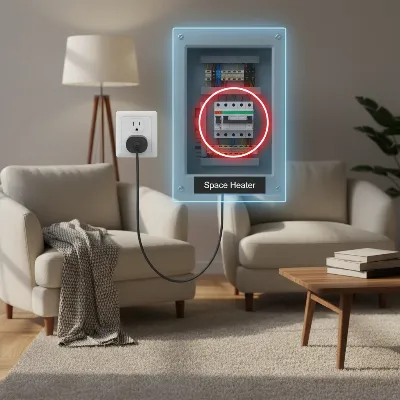 An illustration of a space heater plugged into a dedicated wall outlet, with an electrical panel showing a circuit labeled for the heater
Manage Your Electrical Load Effectively
If a dedicated circuit isn’t an option, or if you’re using multiple space heaters, it becomes even more critical to manage the total electrical load on any given circuit. Unplug any unnecessary devices from the outlet or circuit where the space heater is operating. Avoid running other high-wattage appliances—like hair dryers, microwaves, or vacuum cleaners—on the same circuit simultaneously. Think of your circuit as a highway with a speed limit; adding too many cars (appliances) causes traffic jams (overload).
Choose the Right Space Heater
The size and features of your space heater matter significantly.> “Always match your space heater’s wattage to the intended room size and the circuit’s capacity. An oversized heater is an invitation for electrical trouble.” – Eleanor Vance, Certified Master Electrician
Opt for a heater with a lower wattage if you frequently experience trips, as these draw less current. Look for models with adjustable heat settings, allowing you to run them at a lower power output when full heat isn’t necessary. Crucially, always select a space heater that carries the label of a Nationally Recognized Testing Laboratory (NRTL) like UL (Underwriters Laboratories). These units are tested for safety and often include essential features like automatic shut-off (thermostatic control) and tip-over switches, which turn the heater off if it overheats or gets knocked over.
Direct Plug-in: Avoid Extension Cords and Power Strips
Space heaters should always be plugged directly into a wall outlet. Extension cords and power strips are generally not designed to handle the continuous, high electrical load of a space heater. Using them can cause the cords themselves to overheat, leading to potential fire hazards, or can add resistance that contributes to a circuit trip. If an extension cord is absolutely unavoidable, ensure it is a heavy-duty model (14-gauge wire or larger), as short as possible, and specifically rated for the wattage of your space heater. Never “daisy-chain” multiple extension cords together.
Regular Maintenance and Inspections
Make it a habit to regularly inspect your space heater and its cord for any signs of damage, such as frayed wires, exposed insulation, or discolored plugs. A damaged cord can indicate internal issues or create a fire risk. Ensure the heater is kept clean and free from dust buildup, which can obstruct vents and lead to overheating. Always position your space heater on a stable, level surface, and maintain at least three feet of clearance from all combustible materials like curtains, furniture, and bedding.
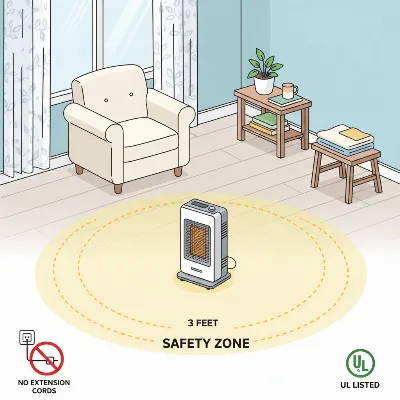 A graphic illustrating safe space heater placement with 3-foot clearance from combustibles
When to Call a Professional Electrician
While many issues can be resolved with the tips above, some situations warrant professional intervention. If your breaker trips instantly with a loud pop when you plug in the heater, it’s a sign of a short circuit that could be in your wiring or the outlet, not just the heater. If breakers trip frequently even when the space heater isn’t in use, or if you notice flickering lights, burning smells from outlets, or outlets that feel warm to the touch, these are serious indications of underlying electrical problems. In older homes, an outdated electrical panel may simply not have the capacity for modern electrical loads, and an upgrade might be necessary. A licensed electrician can diagnose complex issues, inspect your home’s wiring, and ensure your electrical system is safe and up to code.
Conclusion
Keeping your space heater from tripping the breaker is primarily about understanding electrical loads and practicing safe usage. By utilizing dedicated circuits, managing appliance usage on shared circuits, ensuring your heater has essential safety features, and plugging it directly into the wall, you can significantly reduce the risk of interruptions and hazards. A tripped breaker is your electrical system’s way of signaling a potential problem, and addressing it promptly is key to maintaining a safe and warm home. Don’t hesitate to consult a professional electrician if you suspect deeper electrical issues. What steps will you take today to ensure your space heater operates safely and efficiently all season long?
Frequently Asked Questions
Can a faulty space heater permanently damage my electrical system?
While a modern electrical system with functioning circuit breakers is designed to prevent permanent damage by tripping and cutting power, repeatedly tripping a breaker due to a faulty heater can degrade your wiring insulation over time. This consistent stress increases the risk of serious electrical issues or even fire if left unaddressed.
Is it better to use a space heater with a lower wattage to avoid trips?
Yes, using a space heater with a lower wattage can significantly reduce the likelihood of tripping a breaker. A lower wattage heater draws less current, making it easier for standard household circuits to handle the load, especially if other appliances are also in use on the same circuit.
Frequently Asked Questions
Why does my space heater keep tripping the circuit breaker?
Your space heater likely trips the circuit breaker due to an overloaded circuit. Space heaters typically draw around 12.5 amps (for a 1500W unit), which can exceed the 15 or 20-amp capacity of most residential circuits, especially when other appliances are also in use.
What are the dangers of a space heater repeatedly tripping a breaker?
Repeatedly tripping a breaker with a space heater can degrade your home's wiring insulation over time. This consistent stress increases the risk of serious electrical issues, including potential electrical fires, as highlighted by the U.S. Consumer Product Safety Commission.
Can I use an extension cord with my space heater?
No, space heaters should always be plugged directly into a wall outlet. Extension cords and power strips are generally not designed for the continuous, high electrical load of a space heater and can overheat, leading to fire hazards or contributing to circuit trips.
When should I call an electrician for space heater issues?
You should call an electrician if your breaker trips instantly with a loud pop when the heater is plugged in, if breakers trip frequently even without the heater, or if you notice flickering lights, burning smells, or warm outlets. These indicate serious underlying electrical problems.
How much clearance is needed around a space heater for safety?
For safety, always position your space heater on a stable, level surface and maintain at least three feet (about 90 cm) of clearance from all combustible materials. This includes curtains, furniture, bedding, and any other flammable items.
Prevent Space Heater From Tripping Breaker
Follow these steps to safely operate your space heater and avoid circuit breaker trips, ensuring a warm and secure home environment.
Plug your space heater into a dedicated electrical circuit whenever possible. This ensures the heater has its own power supply and doesn't compete with other appliances, preventing overload.
If a dedicated circuit isn't available, unplug other high-wattage devices from the same circuit as your space heater. Avoid running appliances like hair dryers or microwaves simultaneously to prevent exceeding the circuit's capacity.
Select a space heater with a wattage appropriate for your room size and circuit capacity. Lower wattage models (e.g., under 1500W) draw less current, reducing the risk of trips. Look for NRTL-certified units with safety features like automatic shut-off.
Always plug your space heater directly into a wall outlet. Never use extension cords or power strips, as they are not designed for the continuous high electrical load of a space heater and can cause overheating or fire hazards.
Inspect your space heater and its cord regularly for any signs of damage. Keep the heater clean and free from dust buildup, and ensure it is placed on a stable surface with at least three feet of clearance from combustible materials.

This was helpful for understanding why my heater keeps shutting off. I thought it was just a faulty heater, but it sounds like my older electrical system might be the real problem. It’s a bit of a bummer because I was hoping for a quick fix, but at least now I know what to look into. Still, the heater itself works fine when it’s not tripping.
I appreciate the breakdown of how a circuit breaker is a safety mechanism. It made me feel better about why it happens, instead of just being frustrated. I’ve started being more mindful of what else is plugged into the same circuit when I use my space heater, and it’s helped a lot. Definitely a good read for anyone with chilly spots in their house.
I was constantly dealing with my space heater tripping the breaker in my home office, which was super annoying. After reading about the 12.5 amps most 1,500-watt heaters draw, I realized I was definitely overloading the circuit with my computer and monitor. Moving it to a dedicated outlet made all the difference. No more sudden power outages!
My old space heater was a nightmare, constantly causing issues. I learned here that internal heater malfunctions like short circuits can be a cause, which makes sense for my old unit. I ended up getting a new one with better safety features, and I’ve been careful to plug it into a 20-amp circuit. So far, no more trips!