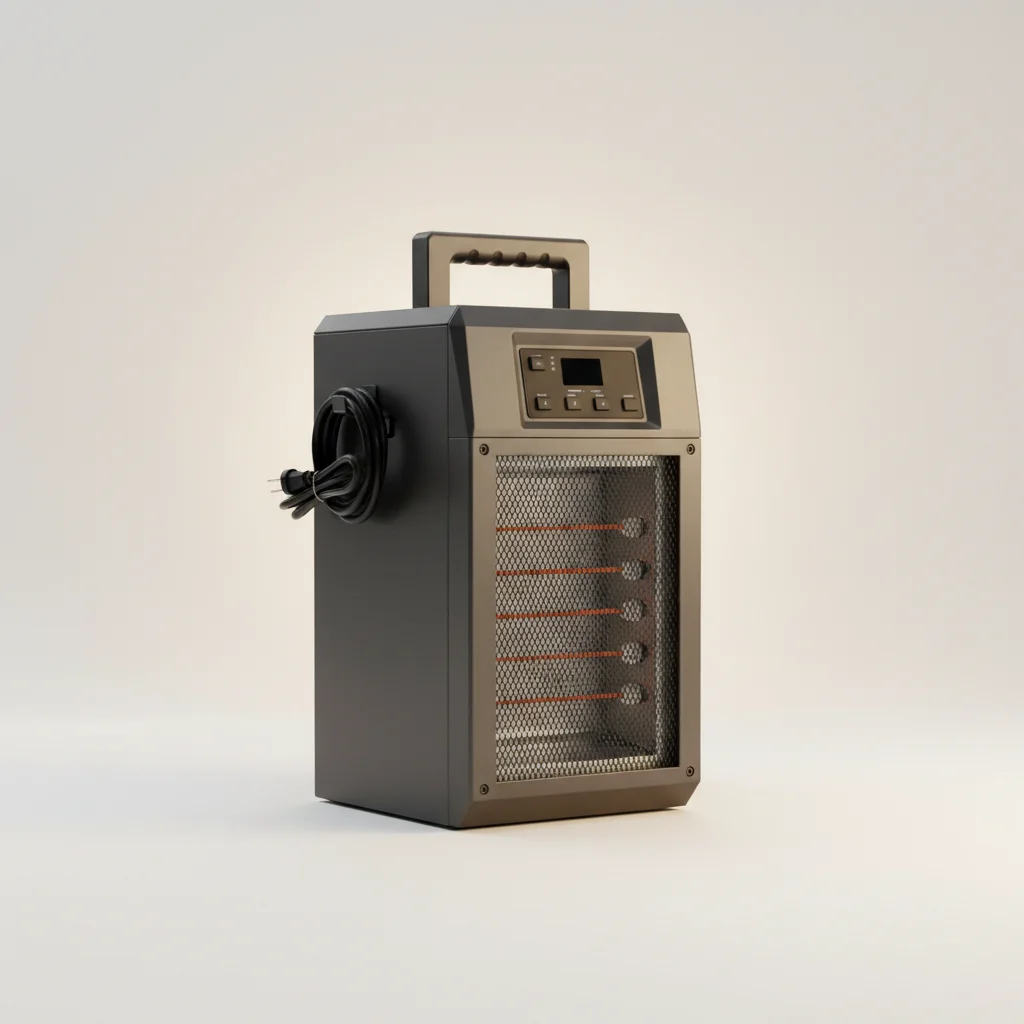
To determine the correct size space heater for your basement, aim for approximately 10 watts of heating power per square foot for well-insulated spaces. For example, a 1500-watt space heater can effectively warm a room up to 150 square feet. However, basements often have unique characteristics like concrete walls, poor insulation, and higher humidity, which may necessitate increasing this to 12-15 watts per square foot for optimal heating efficiency and comfort.
Understanding Basement Heating Challenges
Basements present distinct challenges for heating. Concrete walls and floors absorb and retain cold, making them feel colder than above-ground rooms. Insulation levels are frequently lower, leading to greater heat loss. Additionally, basements can be prone to dampness, which makes the air feel cooler and requires more energy to heat. These factors mean that a simple square footage calculation might be insufficient; you may need to consider a slightly higher wattage or a heater with specific features designed for challenging environments. For explore our reviews reviews on this site.
Calculating Your Basement’s Heating Needs
To accurately calculate your basement’s heating needs, first measure its length and width to determine the total square footage. Multiply this number by 10 watts per square foot. For example, a 200-square-foot basement would ideally need a 2000-watt heater. If your basement has poor insulation, high ceilings, or is particularly drafty, consider increasing this to 12-15 watts per square foot. Always err on the side of slightly more power rather than less, as an underpowered heater will run constantly and still struggle to heat the space effectively.
- Measure the length and width of your basement.
- Calculate square footage (Length x Width).
- Multiply square footage by 10 watts (for well-insulated) or 12-15 watts (for poorly insulated/drafty).
- Consider heater features like oscillation or fan-forced heating for better heat distribution.
- Account for any existing heat sources or cold spots.
Types of Space Heaters Suitable for Basements
|
Our Picks for the Best Space Heater in 2026
As an Amazon Associate I earn from qualifying purchases.
|
||
| Num | Product | Action |
|---|---|---|
| 1 | Dreo Space Heater 1500W, 60° Adjustable Tilt, 10.5ft/s Portable Electric Heaters for Indoor Use with Thermostat, 8 Safety Protections, 3 Modes, Remote, Quiet Desk Heater for Bedroom, Office, Black |

|
| 2 | DREO Space Heater, 1500W Portable Electric Heaters for Indoor Use, PTC Ceramic Heater for Office with Remote, Thermostat, 70°Oscillation, 12H Timer, 5 Modes, Safe Quiet Room Heater for Bedroom |
|
| 3 | DREO Space Heater, Portable Electric Heaters for Indoor Use with Thermostat and Remote, 2024 Upgraded, Digital Display, 12H Timer, 5 Mode, 1500W PTC Ceramic Fast Safety Heat for Office Bedroom Home |
|
| 4 | DREO Space Heater, 1500W Electric Heaters for Indoor Use with Thermostat, 70° Oscillation, 8 Safety Protections, 5 Modes, Remote, 12H Timer, Quiet Portable Heater for Office, Bedroom, Large Room |
|
| 5 | DREO Quiet Space Heater, 1500W Portable Heaters for Indoor Use with Remote, 70° Oscillation, Fast and Safety Electric PTC Ceramic for Desk Office Bedroom, 12H Timer |
|
| 6 | Dr Infrared Heater DR-968 Portable Space Heater, 1500-Watt, Cherry |
|
| 7 | DREO Space Heater for Large Room, 23 Inch Electric Heaters for Indoor Use, 8 Safe Protection Tower, 70° Oscillation, PTC Ceramic with Thermostat and Remote, Quiet, 12H Timer, Bedroom, Office |
|
| 8 | DREO Space Heater Indoor, 25" 11.5ft/s Fast Portable Room Heater with Remote and Thermostat, 3 Modes, Overheating & Tip-Over Protection, Electric Heaters for Indoor Use Large Room, Bedroom, Gold |
|
| 9 | DREO Atom One Space Heater with Remote, 70°Oscillating Electric Heaters with Digital Thermostat, 1500W PTC Ceramic Heater, 12h Timer, Quiet Safety Heating, Portable Heater for Home Office |
|
| 10 | DREO Space Heater, Portable Electric Heaters for Indoor Use with Thermostat and Remote, 2024 Upgraded, Digital Display, 12H Timer, 5 Mode, 1500W PTC Ceramic Fast Safety Heat for Office Bedroom Home |
|
Several types of space heaters are well-suited for basement environments. Convection heaters, such as oil-filled radiators, are excellent for providing consistent, ambient heat over a longer period, making them ideal for basements used as living spaces. Fan-forced ceramic heaters offer quick, direct heat, which can be beneficial for rapidly warming up a cold basement before use. Infrared heaters are also a good option as they directly heat objects and people, rather than the air, which can be more efficient in drafty or poorly insulated basements.When choosing, consider the primary use of your basement and how quickly you need the space to warm up.
Safety Considerations for Basement Space Heaters
Safety is paramount when using any space heater, especially in a basement. Ensure the heater has tip-over protection and overheat shut-off features. Always plug the heater directly into a wall outlet; avoid extension cords, which can overheat and pose a fire hazard. Keep the heater on a level, stable surface and maintain a safe distance of at least three feet from any flammable materials like curtains, furniture, or storage boxes. Regularly inspect the heater and its cord for any signs of damage.Proper ventilation is also important, especially if using a combustion-based heater, to prevent carbon monoxide buildup.
Optimizing Heat Distribution and Efficiency
Once you’ve selected the right-sized space heater, optimizing its placement and use can significantly improve efficiency. Position the heater in a central location or near the coldest areas of the basement to maximize heat distribution. Using a ceiling fan on its lowest setting to gently push warm air down can also help circulate heat more effectively. Sealing any drafts around windows or doors and adding rugs or carpets can further reduce heat loss and make the basement feel warmer. Consider a heater with a programmable thermostat to maintain a consistent temperature and save energy when the basement is not in use.
Frequently Asked Questions
How do I calculate the correct wattage for a basement space heater?
To calculate the correct wattage, measure your basement's square footage and multiply it by 10 watts for well-insulated areas, or 12-15 watts for poorly insulated or drafty basements. For example, a 150 sq ft basement needs a 1500-watt heater.
What types of space heaters are best suited for basements?
Convection heaters like oil-filled radiators provide consistent ambient heat, while fan-forced ceramic heaters offer quick, direct warmth. Infrared heaters are efficient in drafty basements as they directly heat objects and people, not just the air.
What safety features are essential for a basement space heater?
Essential safety features include tip-over protection and overheat shut-off. Always plug the heater directly into a wall outlet, avoid extension cords, and maintain at least three feet of clearance from flammable materials.
How can I improve heat distribution and efficiency in my basement?
Position the heater centrally or near cold spots. Using a ceiling fan on a low setting can help circulate warm air. Sealing drafts and adding rugs or carpets can also reduce heat loss and improve overall warmth.
Why are basements harder to heat than above-ground rooms?
Basements are harder to heat due to concrete walls and floors that absorb and retain cold, often lower insulation levels leading to heat loss, and higher humidity which makes the air feel cooler and requires more energy to heat effectively.
Calculate Basement Space Heater Size
Determine the appropriate wattage for a space heater in your basement to ensure efficient and effective heating.
Begin by measuring the length and width of your basement. Use a tape measure to get accurate figures for both dimensions. This step is crucial for calculating the total area that needs heating.
Multiply the measured length by the width to find the total square footage of your basement. For instance, a basement that is 10 feet long and 20 feet wide has a square footage of 200 sq ft. This number forms the basis for wattage calculation.
Multiply the square footage by 10 watts for well-insulated basements. If your basement has poor insulation, high ceilings, or is drafty, multiply by 12-15 watts per square foot. For example, a 200 sq ft poorly insulated basement might need a 2400-3000 watt heater.
Beyond wattage, think about features like oscillation or fan-forced heating for better heat distribution. Also, account for any existing heat sources or persistent cold spots in the basement. These factors can influence the final heater choice.

My basement office used to be unbearable in the winter. I was always bundled up! After reading about how concrete walls absorb and retain cold, I understood why. I invested in a good 1500-watt heater for my 140 sq ft space, and it’s been a game-changer. The air feels so much warmer, and I’m finally comfortable working down there. No more shivering!
I tried to follow the advice about accounting for poor insulation and dampness, but my 1500-watt heater for a 130 sq ft basement still struggles a bit. It warms up, but it takes a while, and if I turn it off, the cold comes back fast. I think my basement might just be a lost cause with how much cold those concrete floors hold onto. It’s better than nothing, though.
I finally got a space heater for my basement workshop after reading about the 12-15 watts per square foot recommendation. My basement is pretty drafty with those cold concrete walls, so I went with a slightly more powerful unit than I initially thought. It’s made such a difference! I can actually spend hours down there now without freezing. Highly recommend sizing up if your basement is like mine.
This guide was super helpful for figuring out what I needed. I have a finished basement that’s about 120 sq ft, and the 10 watts per square foot rule worked perfectly for me. I picked up a 1200-watt heater, and it keeps the space nice and cozy for movie nights. My only minor complaint is that it can be a little loud on the highest setting, but it’s not a dealbreaker.