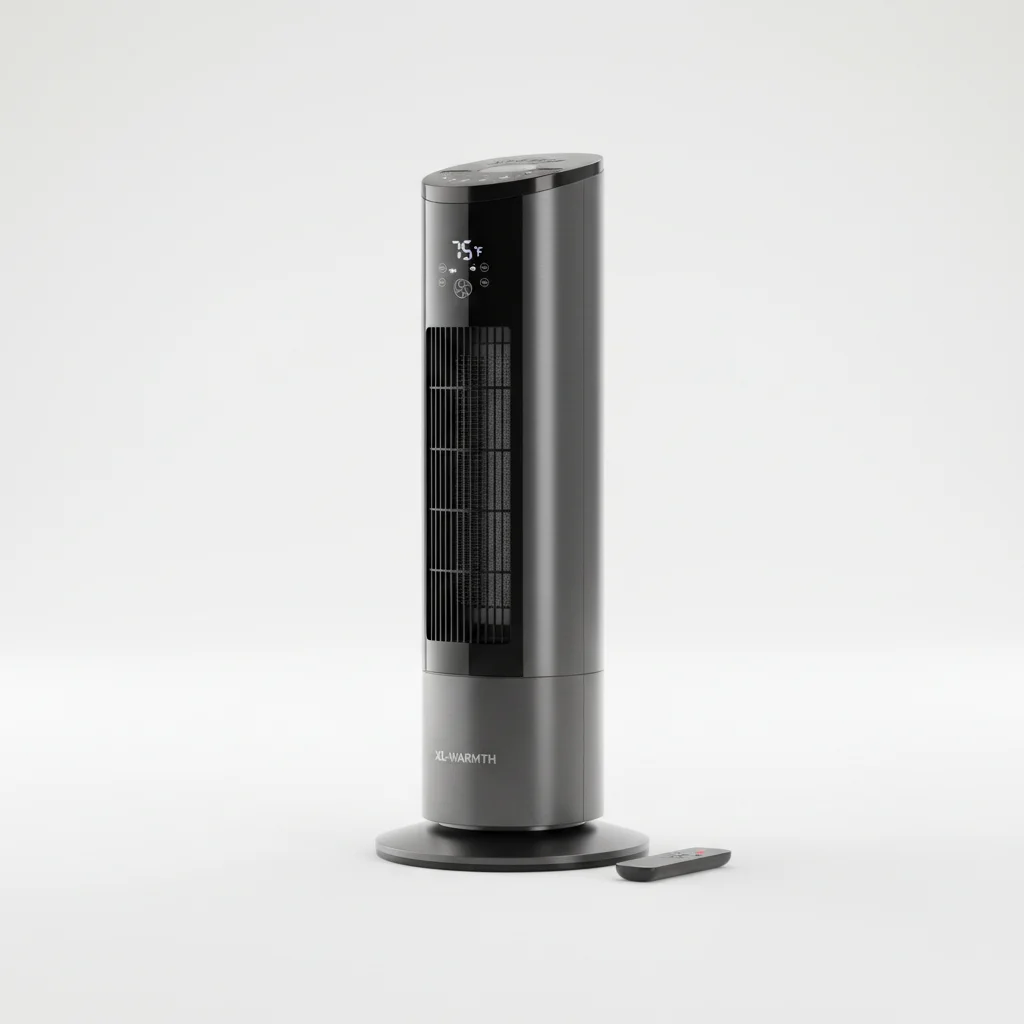
To effectively heat a large room, you generally need approximately 10 watts of heating power per square foot. For instance, a 200-square-foot room typically requires a 2000-watt heater to achieve comfortable temperatures. This guideline helps match the heater’s output to the room’s dimensions, ensuring efficient warmth.
Understanding Room Size and Heater Wattage
The fundamental principle for heating a large room involves matching the heater’s output to the room’s dimensions. The common guideline is the 10-watt-per-square-foot rule. This means a 300-square-foot room would ideally require a 3000-watt heater. However, most standard household circuits are limited to 1500 watts for a single appliance, which may necessitate multiple heaters or a specialized 240V unit for very large spaces. Always verify your circuit breaker’s capacity before using high-wattage heaters.
Factors such as ceiling height, insulation quality, and the number of windows also influence the actual wattage needed. A room with poor insulation or high ceilings will demand more power to maintain warmth compared to a well-insulated room of the same size.
Types of Space Heaters for Larger Areas
When heating larger rooms, certain types of space heaters are more effective. Convection heaters, such as oil-filled radiators or ceramic tower heaters, are excellent choices because they warm the air throughout the entire room, providing consistent, ambient heat. Radiant heaters, while effective for direct, personal warmth, are less suitable for heating a broad area.
For very large spaces like basements or garages, consider industrial-grade heaters or those designed for 240V outlets, which can deliver significantly more wattage. Always prioritize safety features like tip-over protection and overheat shut-off, especially with higher-powered units.
Calculating Your Specific Heating Needs
|
Our Picks for the Best Space Heater in 2026
As an Amazon Associate I earn from qualifying purchases.
|
||
| Num | Product | Action |
|---|---|---|
| 1 | Dreo Space Heater 1500W, 60° Adjustable Tilt, 10.5ft/s Portable Electric Heaters for Indoor Use with Thermostat, 8 Safety Protections, 3 Modes, Remote, Quiet Desk Heater for Bedroom, Office, Black |

|
| 2 | DREO Space Heater for Large Room, 23 Inch Electric Heaters for Indoor Use, 8 Safe Protection Tower, 70° Oscillation, PTC Ceramic with Thermostat and Remote, Quiet, 12H Timer, Bedroom, Office |
|
| 3 | DREO Atom One Space Heater with Remote, 70°Oscillating Electric Heaters with Digital Thermostat, 1500W PTC Ceramic Heater, 12h Timer, Quiet Safety Heating, Portable Heater for Home Office |
|
| 4 | DREO Space Heater, Portable Electric Heaters for Indoor Use with Thermostat and Remote, 2024 Upgraded, Digital Display, 12H Timer, 5 Mode, 1500W PTC Ceramic Fast Safety Heat for Office Bedroom Home |
|
| 5 | DREO Quiet Space Heater, 1500W Portable Heaters for Indoor Use with Remote, 70° Oscillation, Fast and Safety Electric PTC Ceramic for Desk Office Bedroom, 12H Timer |
|
| 6 | DREO Space Heater, Portable Electric Heaters for Indoor Use with Thermostat and Remote, 2024 Upgraded, Digital Display, 12H Timer, 5 Mode, 1500W PTC Ceramic Fast Safety Heat for Office Bedroom Home |
|
| 7 | DREO Space Heater, 1500W Portable Electric Heaters for Indoor Use, PTC Ceramic Heater for Office with Remote, Thermostat, 70°Oscillation, 12H Timer, 5 Modes, Safe Quiet Room Heater for Bedroom |
|
| 8 | Dr Infrared Heater DR-968 Portable Space Heater, 1500-Watt, Cherry |
|
| 9 | DREO Space Heater, 1500W Electric Heaters for Indoor Use with Thermostat, 70° Oscillation, 8 Safety Protections, 5 Modes, Remote, 12H Timer, Quiet Portable Heater for Office, Bedroom, Large Room |
|
| 10 | DREO Space Heater Indoor, 25" 11.5ft/s Fast Portable Room Heater with Remote and Thermostat, 3 Modes, Overheating & Tip-Over Protection, Electric Heaters for Indoor Use Large Room, Bedroom, Gold |
|
To accurately determine the wattage you need, measure the length and width of your room to calculate the square footage. Then, multiply that number by 10. For example, a room that is 15 feet by 20 feet is 300 square feet, requiring approximately 3000 watts. If your room has particularly high ceilings (over 8 feet) or is poorly insulated, you might increase that multiplier to 12 or even 15 watts per square foot.
It’s also important to consider your climate. Colder regions will naturally require more heating power than milder ones. Factor in any existing heating systems; a space heater can supplement, but not always replace, a central heating system in a very large, cold room.
Key Features to Look for in Large Room Heaters
- High Wattage Output: Aim for 1500 watts or more, depending on your room size and electrical capacity.
- Multiple Heat Settings: Allows for energy efficiency and customizable comfort.
- Thermostat Control: Maintains a consistent temperature and prevents overheating.
- Safety Features: Overheat protection, tip-over switch, and cool-touch exterior are crucial.
- Portability: Wheels or a lightweight design can be beneficial for moving the heater around.
Investing in a space heater with these features will ensure both effective heating and safe operation. Remember that while a higher wattage provides more heat, it also consumes more electricity, so balance your needs with energy efficiency.
Installation and Safety Considerations
Proper installation and adherence to safety guidelines are paramount when using a space heater in a large room. Always plug the heater directly into a wall outlet; avoid extension cords or power strips, as they can overheat and pose a fire hazard. Ensure there is at least three feet of clear space around the heater, away from curtains, furniture, and other flammable materials.
Regularly inspect the heater for any signs of damage, such as frayed cords or unusual noises. Never leave a space heater unattended, especially when children or pets are present. For optimal performance and safety, consider a model with an automatic shut-off timer.By following these precautions, you can safely and effectively warm your large living spaces.
Frequently Asked Questions
How many watts do I need for a space heater in a large room?
You generally need approximately 10 watts of heating power per square foot for a large room. For example, a 200-square-foot room requires a 2000-watt heater to achieve comfortable temperatures.
What types of space heaters are best for heating large areas?
Convection heaters, such as oil-filled radiators or ceramic tower heaters, are most effective for large areas. They warm the air throughout the entire room, providing consistent, ambient heat.
Can I use a single space heater for a very large room?
For very large rooms, a single standard 1500-watt space heater might not be sufficient. You may need multiple heaters or a specialized 240V unit to provide adequate warmth, especially if the room is poorly insulated.
What safety features are important for large room space heaters?
Crucial safety features for large room space heaters include overheat protection, a tip-over switch, and a cool-touch exterior. These features help prevent accidents and ensure safe operation.
How do I calculate the exact wattage needed for my room?
To calculate the exact wattage, measure your room's length and width to find the square footage, then multiply that by 10. For rooms with high ceilings or poor insulation, consider multiplying by 12 or 15 watts per square foot.
Calculate Space Heater Wattage for a Large Room
Determine the appropriate wattage for a space heater to effectively warm your large room by following these steps.
Measure the length and width of your room in feet. This will allow you to calculate the total square footage of the space you intend to heat.
Multiply the measured length by the width to get the total square footage. For example, a room that is 15 feet by 20 feet has a square footage of 300.
Multiply the square footage by 10 to find the base wattage required. A 300-square-foot room would need approximately 3000 watts for effective heating.
If your room has high ceilings (over 8 feet) or poor insulation, increase the multiplier to 12 or 15 watts per square foot. This accounts for greater heat loss in less efficient spaces.
Before purchasing, verify your electrical circuit's capacity. Most standard household circuits support up to 1500 watts for a single appliance, so you might need multiple heaters or a 240V unit for higher wattage requirements.

I appreciated the advice about checking circuit breaker capacity. I never even thought about that before buying a heater! My office is around 180 square feet, and I was looking at a 2000-watt unit. After reading this, I double-checked my breaker and realized I’d be better off with a 1500-watt model to be safe. It heats up my space nicely without any issues.
This really clarified why my previous heater felt so weak. I have a high-ceilinged bedroom that’s about 220 sq ft, and I was using a small portable one. The explanation about how ceiling height can affect heating needs made perfect sense. I invested in a more powerful unit, and now the room actually gets warm, even on colder nights. Great info!
This guide was helpful for understanding wattage. I have a pretty big open-concept area, and I was hoping one powerful heater would do the trick. The point about most standard circuits being limited to 1500 watts for a single appliance was a bit of a bummer, as it means I’ll need to buy two heaters instead of one. Still, good to know before I bought something too big for my outlets.
I was always guessing with space heaters, but the 10-watt-per-square-foot rule mentioned here was a game-changer. I have a living room that’s about 250 sq ft, and my old 1500-watt heater just wasn’t cutting it. Upgraded to a 2500-watt model (on a dedicated circuit, of course!) and it’s made such a difference. Finally, my large room feels cozy without cranking up the central heat.