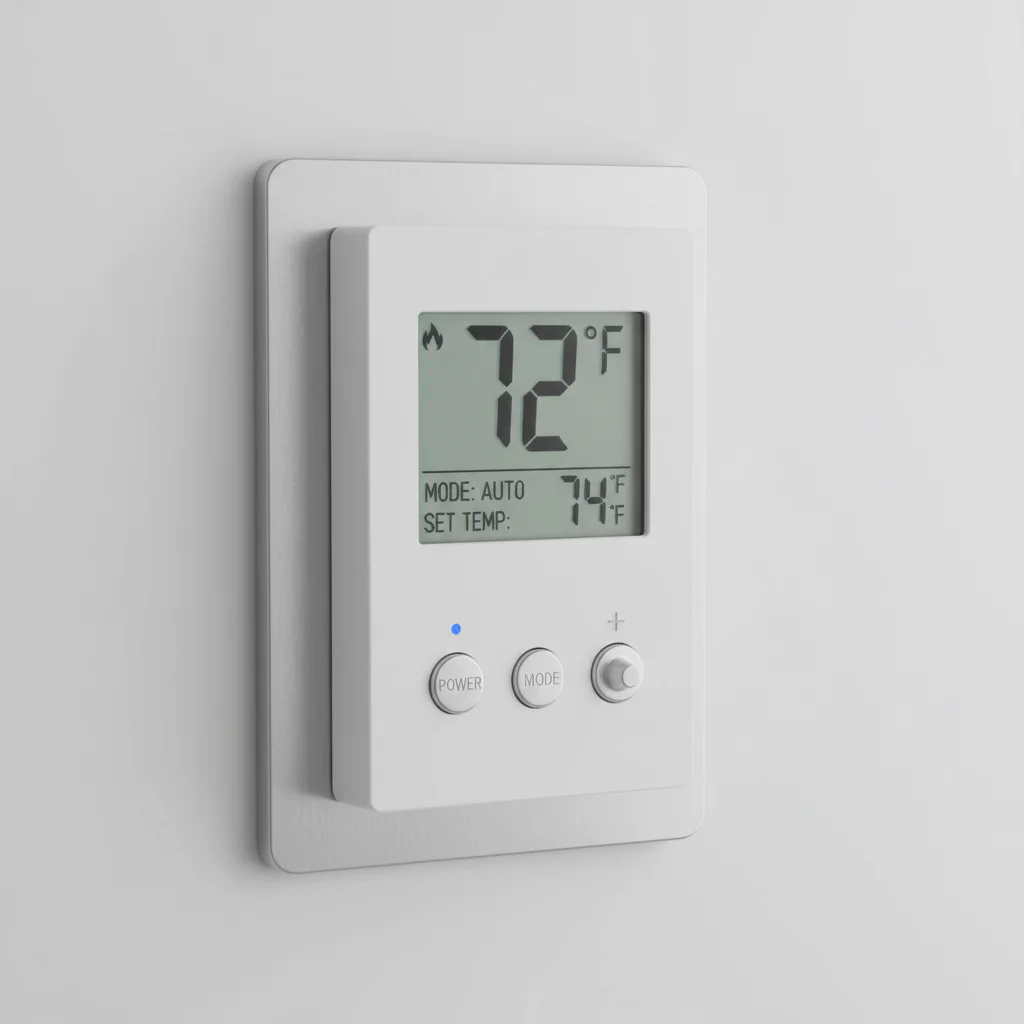
If your space heater thermostat isn’t working, the most common cause is a dirty or obstructed sensor, which can often be fixed with a simple cleaning. Other potential issues include incorrect settings, a faulty internal component, or a power supply problem. Addressing these issues can restore your heater’s ability to regulate temperature effectively and efficiently, preventing it from running continuously or failing to heat.
Understanding Your Space Heater’s Thermostat
A space heater’s thermostat is designed to maintain a consistent room temperature by cycling the heating element on and off as needed. When it malfunctions, the heater might run continuously, fail to turn on, or heat inconsistently. Most modern space heaters utilize either a bimetallic strip thermostat or an electronic sensor. Identifying your heater’s type can aid in diagnosing the specific problem.
Initial Checks and Simple Solutions
Before attempting more complex troubleshooting, perform several basic checks. First, ensure the heater is plugged into a functioning electrical outlet and that the power cord is undamaged. Next, verify that the thermostat settings are correctly adjusted to your desired temperature. Sometimes, the issue is as simple as the heater being set to a very low temperature or a fan-only mode. Additionally, check if any safety features, such as a tip-over switch or overheat protection, have been activated, as these can prevent the heater from operating normally.
- Confirm the power supply and cord integrity.
- Verify thermostat settings are appropriate for desired temperature.
- Check for activated safety features like tip-over switches.
- Ensure the heater is on a flat, stable surface.
- Clean any visible dust or debris from the thermostat area.
Cleaning the Thermostat Sensor
|
Our Picks for the Best Space Heater in 2026
As an Amazon Associate I earn from qualifying purchases.
|
||
| Num | Product | Action |
|---|---|---|
| 1 | DREO Space Heater, Portable Electric Heaters for Indoor Use with Thermostat and Remote, 2024 Upgraded, Digital Display, 12H Timer, 5 Mode, 1500W PTC Ceramic Fast Safety Heat for Office Bedroom Home |

|
| 2 | DREO Quiet Space Heater, 1500W Portable Heaters for Indoor Use with Remote, 70° Oscillation, Fast and Safety Electric PTC Ceramic for Desk Office Bedroom, 12H Timer |
|
| 3 | DREO Space Heater, 1500W Portable Electric Heaters for Indoor Use, PTC Ceramic Heater for Office with Remote, Thermostat, 70°Oscillation, 12H Timer, 5 Modes, Safe Quiet Room Heater for Bedroom |
|
| 4 | DREO Space Heater for Large Room, 23 Inch Electric Heaters for Indoor Use, 8 Safe Protection Tower, 70° Oscillation, PTC Ceramic with Thermostat and Remote, Quiet, 12H Timer, Bedroom, Office |
|
| 5 | DREO Space Heater, Portable Electric Heaters for Indoor Use with Thermostat and Remote, 2024 Upgraded, Digital Display, 12H Timer, 5 Mode, 1500W PTC Ceramic Fast Safety Heat for Office Bedroom Home |
|
| 6 | Dreo Space Heater 1500W, 60° Adjustable Tilt, 10.5ft/s Portable Electric Heaters for Indoor Use with Thermostat, 8 Safety Protections, 3 Modes, Remote, Quiet Desk Heater for Bedroom, Office, Black |
|
| 7 | DREO Atom One Space Heater with Remote, 70°Oscillating Electric Heaters with Digital Thermostat, 1500W PTC Ceramic Heater, 12h Timer, Quiet Safety Heating, Portable Heater for Home Office |
|
| 8 | Dr Infrared Heater DR-968 Portable Space Heater, 1500-Watt, Cherry |
|
| 9 | DREO Space Heater, 1500W Electric Heaters for Indoor Use with Thermostat, 70° Oscillation, 8 Safety Protections, 5 Modes, Remote, 12H Timer, Quiet Portable Heater for Office, Bedroom, Large Room |
|
| 10 | DREO Space Heater Indoor, 25" 11.5ft/s Fast Portable Room Heater with Remote and Thermostat, 3 Modes, Overheating & Tip-Over Protection, Electric Heaters for Indoor Use Large Room, Bedroom, Gold |
|
Dust and debris are frequent causes of thermostat malfunction. Over time, particles can accumulate on the sensor, preventing it from accurately reading the ambient temperature. To clean it, first unplug the heater from the wall. Locate the thermostat sensor, which is often a small, metallic probe or a vent on the heater’s body. Gently wipe it with a soft, dry cloth or use a can of compressed air to remove any buildup. Avoid using liquids directly on the sensor. After cleaning, plug the heater back in and test its functionality.
Addressing Electronic and Internal Issues
If cleaning the sensor doesn’t resolve the problem, the issue might be electronic. For heaters with digital thermostats, try resetting the unit by unplugging it for a few minutes and then plugging it back in. This can sometimes clear minor software glitches. If the problem persists, it could indicate a faulty internal component, such as the thermostat itself or a wiring issue. At this point, if you are not comfortable with electrical repairs, it’s best to consult a qualified technician or consider replacing the unit, especially if it’s an older model.
When to Consider Professional Help or Replacement
While many thermostat issues can be resolved with simple DIY steps, some problems require professional attention. If you’ve tried all troubleshooting steps and your space heater’s thermostat still isn’t working, or if you notice burning smells, sparks, or unusual noises, discontinue use immediately. These could be signs of a more serious electrical fault that poses a fire hazard. For complex internal repairs, a certified electrician or appliance repair specialist can diagnose and fix the problem safely. However, given the relatively low cost of many space heaters, purchasing a new, more efficient model might be a more cost-effective and safer solution than extensive repairs.
Frequently Asked Questions
What causes a space heater thermostat to stop working?
A space heater thermostat typically stops working due to a dirty or obstructed sensor, incorrect settings, or a power supply problem. Less commonly, it could be a faulty internal electronic component or wiring issue. Cleaning the sensor often resolves the problem.
How do I clean a space heater's thermostat sensor?
To clean a space heater's thermostat sensor, first unplug the heater. Locate the small metallic probe or vent on the heater's body. Gently wipe it with a soft, dry cloth or use compressed air to remove dust and debris, avoiding any liquids.
Can I reset a digital space heater thermostat?
Yes, you can often reset a digital space heater thermostat by unplugging the unit from the wall for a few minutes and then plugging it back in. This can clear minor software glitches that might be affecting its functionality.
When should I call a professional for space heater repair?
You should call a professional for space heater repair if basic troubleshooting steps don't resolve the issue, or if you observe burning smells, sparks, or unusual noises. These symptoms indicate a serious electrical fault that requires a certified electrician or appliance repair specialist.
Is it better to repair or replace a broken space heater?
For many space heaters, especially older models, replacing the unit is often more cost-effective and safer than extensive repairs. Professional repair costs can quickly exceed the price of a new, more efficient model, particularly for complex internal component failures.
Troubleshoot a Space Heater Thermostat
Follow these steps to diagnose and fix common issues with a space heater thermostat that isn't working correctly.
Ensure the heater is plugged into a functioning outlet and the power cord is undamaged. Verify that the thermostat settings are correctly adjusted to your desired temperature, and check for activated safety features like tip-over switches.
Unplug the heater and locate the thermostat sensor, often a small probe or vent. Gently wipe it with a soft, dry cloth or use compressed air to remove any accumulated dust and debris. Avoid using liquids directly on the sensor.
For heaters with digital thermostats, unplug the unit for several minutes, then plug it back in. This can often clear minor software glitches that might be causing the thermostat to malfunction.
If the problem persists after cleaning and resetting, or if you notice burning smells, sparks, or unusual noises, discontinue use immediately. Consult a qualified technician or consider replacing the unit for safety and cost-effectiveness.

I had a power supply problem with my space heater last winter, and it was driving me crazy. It would just randomly stop heating. I followed the advice here about checking the cord and outlet, and it turned out to be a loose connection. Simple fix, huge relief! Definitely recommend checking the basics before assuming the worst.
My space heater’s thermostat has been acting up, and I was hoping for a quick fix. I checked the settings and tried cleaning the sensor, but it didn’t really solve the problem. It still heats inconsistently, which is a bummer. I guess it might be a faulty internal component like mentioned, which is beyond my DIY skills.
This was super helpful! My old space heater has a bimetallic strip thermostat, and I never knew what that even meant. Understanding the different types helped me figure out why it was behaving so erratically. I was able to adjust it slightly and now it’s much more reliable at keeping my office cozy without getting too hot.
I was so frustrated when my space heater started running non-stop, even after the room felt warm. I thought I’d have to buy a new one. After reading about the dirty sensor issue, I decided to give it a try and cleaned it with a cotton swab. It actually worked! My heater is now cycling on and off perfectly, saving me from overheating and wasting electricity.