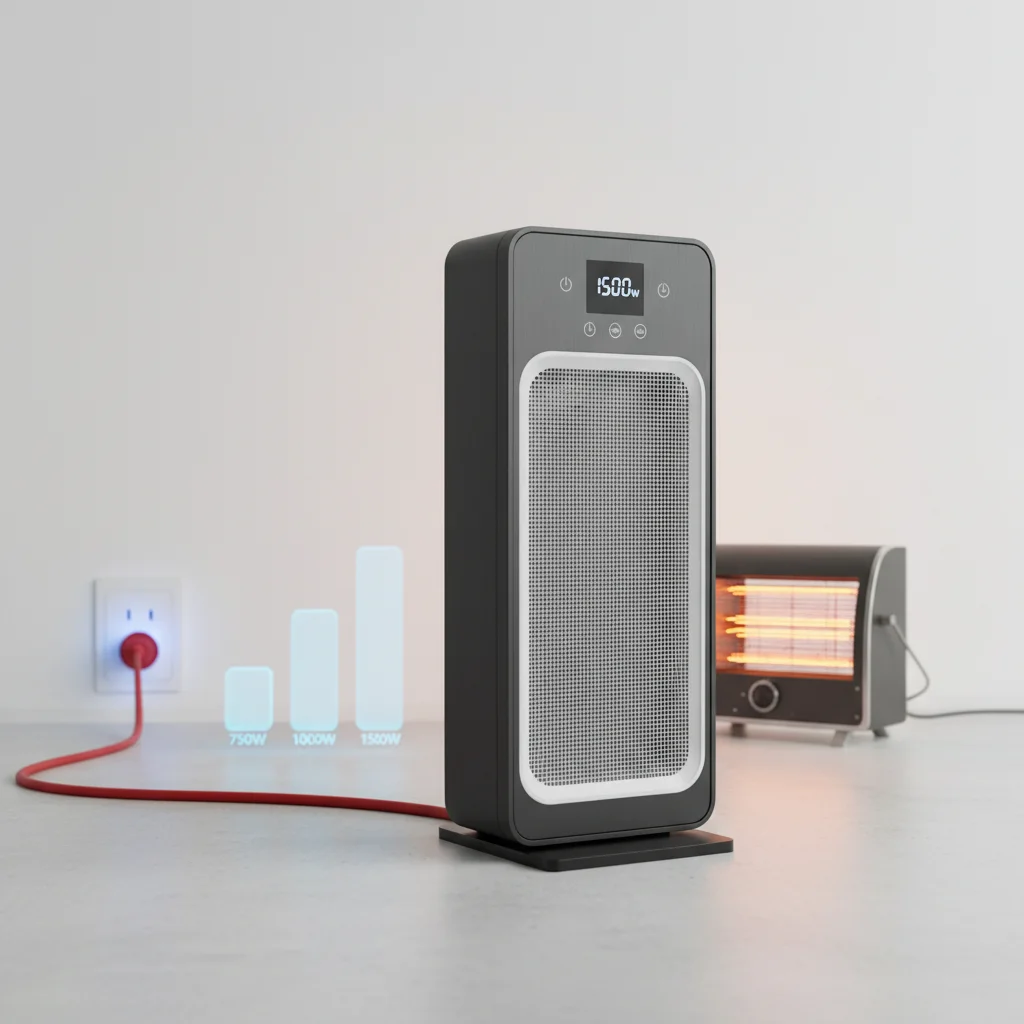
Most standard electric space heaters range from 750 to 1,500 watts, with 1,500 watts being the most common maximum for a single 120V residential circuit. The ideal wattage for a space heater depends on room size, insulation quality, and desired temperature, with a general guideline of 10 watts per square foot for a well-insulated room. Understanding wattage is crucial for both efficient heating and electrical safety.
Calculating Your Heating Needs
To determine the appropriate wattage, a general rule of thumb is to allocate 10 watts per square foot for a well-insulated room with an 8-foot ceiling. For example, a 150-square-foot room would typically require a 1,500-watt heater. However, if your room has poor insulation, high ceilings, or many windows, you might need slightly more wattage or a heater with a higher BTU output. Always consider the primary purpose of the heater – supplemental warmth or primary heat source. For shop curated reviews on this site.
It’s important to note that exceeding the recommended wattage for your circuit can lead to tripped breakers or, worse, electrical hazards. Always check your circuit’s amperage rating before plugging in a high-wattage appliance.
Types of Space Heaters and Their Wattage
Different types of space heaters utilize wattage in varying ways to produce heat. Convection heaters, like oil-filled radiators, often operate at a consistent wattage to warm an entire room gradually. Radiant heaters, such as quartz or ceramic models, tend to deliver more direct, immediate heat to objects and people in their line of sight, often with adjustable wattage settings for focused warmth.
For smaller, personal spaces, lower wattage heaters (around 250-750 watts) can be sufficient and more energy-efficient. Larger rooms or areas with significant heat loss will benefit from higher wattage units, often with multiple heat settings to conserve energy when full power isn’t needed.
Energy Consumption and Cost Implications
|
Our Picks for the Best Space Heater in 2026
As an Amazon Associate I earn from qualifying purchases.
|
||
| Num | Product | Action |
|---|---|---|
| 1 | DREO Space Heater, Portable Electric Heaters for Indoor Use with Thermostat and Remote, 2024 Upgraded, Digital Display, 12H Timer, 5 Mode, 1500W PTC Ceramic Fast Safety Heat for Office Bedroom Home |

|
| 2 | Dreo Space Heater 1500W, 60° Adjustable Tilt, 10.5ft/s Portable Electric Heaters for Indoor Use with Thermostat, 8 Safety Protections, 3 Modes, Remote, Quiet Desk Heater for Bedroom, Office, Black |
|
| 3 | DREO Space Heater, Portable Electric Heaters for Indoor Use with Thermostat and Remote, 2024 Upgraded, Digital Display, 12H Timer, 5 Mode, 1500W PTC Ceramic Fast Safety Heat for Office Bedroom Home |
|
| 4 | Dr Infrared Heater DR-968 Portable Space Heater, 1500-Watt, Cherry |
|
| 5 | DREO Space Heater, 1500W Portable Electric Heaters for Indoor Use, PTC Ceramic Heater for Office with Remote, Thermostat, 70°Oscillation, 12H Timer, 5 Modes, Safe Quiet Room Heater for Bedroom |
|
| 6 | DREO Space Heater Indoor, 25" 11.5ft/s Fast Portable Room Heater with Remote and Thermostat, 3 Modes, Overheating & Tip-Over Protection, Electric Heaters for Indoor Use Large Room, Bedroom, Gold |
|
| 7 | DREO Atom One Space Heater with Remote, 70°Oscillating Electric Heaters with Digital Thermostat, 1500W PTC Ceramic Heater, 12h Timer, Quiet Safety Heating, Portable Heater for Home Office |
|
| 8 | DREO Space Heater, 1500W Electric Heaters for Indoor Use with Thermostat, 70° Oscillation, 8 Safety Protections, 5 Modes, Remote, 12H Timer, Quiet Portable Heater for Office, Bedroom, Large Room |
|
| 9 | DREO Space Heater for Large Room, 23 Inch Electric Heaters for Indoor Use, 8 Safe Protection Tower, 70° Oscillation, PTC Ceramic with Thermostat and Remote, Quiet, 12H Timer, Bedroom, Office |
|
| 10 | DREO Quiet Space Heater, 1500W Portable Heaters for Indoor Use with Remote, 70° Oscillation, Fast and Safety Electric PTC Ceramic for Desk Office Bedroom, 12H Timer |
|
The wattage of your space heater directly impacts its energy consumption and, consequently, your electricity bill. A 1,500-watt heater running for one hour consumes 1.5 kilowatt-hours (kWh) of electricity. To estimate your daily or monthly cost, multiply the kWh by your local electricity rate. Opting for a heater with a thermostat and timer can significantly reduce energy waste by only operating when needed.
- Check your local electricity rate per kWh.
- Calculate daily usage: (Wattage / 1000) x Hours Used.
- Consider models with eco-modes or energy-saving features.
- Ensure proper insulation in the room to minimize heat loss.
- Use a smart plug to schedule heater operation.
While higher wattage heaters provide more heat, they also draw more power. Balancing your heating needs with energy efficiency is key to comfortable and affordable warmth.
Safety Considerations for High Wattage Heaters
Operating high-wattage space heaters requires careful attention to safety. Always plug your space heater directly into a wall outlet; avoid extension cords or power strips, as they can overheat and pose a fire risk. Ensure the heater is placed on a stable, level surface, away from flammable materials like curtains, furniture, and bedding. Maintain at least a three-foot clearance around the heater on all sides.
Regularly inspect the heater’s cord and plug for any signs of damage, fraying, or discoloration. If you notice any issues, discontinue use immediately. Modern space heaters often come equipped with safety features such as tip-over protection and automatic overheat shut-off, which are essential for peace of mind.
Frequently Asked Questions
What is the typical wattage range for electric space heaters?
Most standard electric space heaters operate within a range of 750 to 1,500 watts. The 1,500-watt setting is the most common maximum for devices plugged into a single 120V residential circuit.
How do I calculate the right wattage for my room size?
A general rule of thumb is to allocate 10 watts per square foot for a well-insulated room with an 8-foot ceiling. For instance, a 150-square-foot room typically requires a 1,500-watt heater.
Do different types of space heaters use wattage differently?
Yes, convection heaters like oil-filled radiators use consistent wattage to warm an entire room gradually. Radiant heaters, such as quartz or ceramic models, deliver direct heat to objects and people, often with adjustable wattage for focused warmth.
How does space heater wattage affect electricity costs?
The wattage directly impacts energy consumption; a 1,500-watt heater running for one hour consumes 1.5 kilowatt-hours (kWh). To estimate costs, multiply kWh by your local electricity rate, and consider models with thermostats to reduce waste.
What are important safety tips for high-wattage space heaters?
Always plug high-wattage space heaters directly into a wall outlet, avoiding extension cords. Ensure at least a three-foot clearance from flammable materials and place the heater on a stable surface. Regularly inspect the cord for damage.

Finally, a clear explanation of how to calculate heating needs! I’ve been trying to figure out the right size for my basement workshop, which is about 200 square feet. Knowing that I’d likely need something around 2,000 watts (or two 1,000-watt units) helps me narrow down my options significantly. This saved me a lot of guesswork.
I appreciate the breakdown of wattage, but I found that even with a 1500-watt heater, my poorly insulated living room still struggles to get really warm. It’s a large room with lots of windows, so maybe the 10 watts per square foot guideline doesn’t quite apply to my situation. It helps a bit, but I was hoping for more.
Great info on understanding wattage for safety! I never really thought about the 120V residential circuit limit before. It’s good to know why most heaters max out at 1,500 watts. This definitely makes me more mindful when choosing a heater for my bedroom, especially since I don’t want to overload anything.
This guide was super helpful! I was always just guessing with space heaters, but the 10 watts per square foot rule made so much sense. I have a 120 sq ft office that’s always chilly, and now I know exactly what to look for. No more tripping breakers or wasting electricity on something too powerful.