When a space heater won’t turn on, the problem often stems from a lack of power, incorrect thermostat settings, activated safety features, or blocked airflow. Many common issues can be resolved with simple DIY troubleshooting steps, such as checking the power source, adjusting controls, or cleaning the unit. Addressing these points can quickly restore warmth to your space without professional help.
Essential Troubleshooting: Why Your Space Heater Is Silent
When your space heater remains stubbornly off, the problem typically stems from one of several common areas: the power supply, thermostat settings, activated safety features, or blockages. Understanding these potential points of failure is the first step toward a quick and effective repair. Always prioritize safety, unplugging the unit before any internal inspections.
Check the Power Source
The most fundamental reason a space heater might not turn on is a lack of power. Begin your troubleshooting here with a systematic check. For see our reviews recommendations on this site.
First, ensure your space heater’s plug is firmly inserted into a wall outlet. A loose connection is a surprisingly common oversight. Next, test the outlet itself. Plug another small appliance, like a lamp or phone charger, into the same outlet to confirm it’s receiving power. If the other device also fails to work, the issue likely lies with the outlet or your home’s electrical system, not the heater.
If the outlet appears dead, your circuit breaker might have tripped. Space heaters draw significant power, and it’s common for them to overload a circuit, especially if sharing it with other high-wattage appliances. Locate your home’s electrical panel and look for any circuit breakers that are in the “off” or middle position. Flip the tripped breaker completely off, then firmly back to the “on” position. If your home uses fuses, check for any blown fuses and replace them. If the breaker repeatedly trips after resetting, there may be a deeper electrical problem, and professional help is recommended. Also, inspect the heater’s power cord for any visible damage, fraying, or burns. A compromised cord can prevent power delivery and pose a safety risk. Avoid using damaged cords or extension cords not rated for the heater’s wattage, as they can cause further issues or even fire hazards.
Examine Thermostat Settings
Sometimes, the simplest solutions are the easiest to overlook. Your heater might not be turning on because its controls aren’t set correctly.
Ensure the heater’s main power switch is in the “on” position. Many units also have a thermostat or temperature control dial. Confirm that the thermostat is set to “heat” mode and that the desired temperature is higher than the current room temperature. If the setting is too low, the heater simply won’t activate. For digital thermostats, check if the display is blank or unresponsive; if so, replace the batteries if applicable. Some models may have a manual calibration setting, which could be worth checking in your heater’s manual if the issue persists. A quick rotation of the dial or adjustment of the digital settings can sometimes resolve the problem immediately.
Address Safety Features
|
Our Picks for the Best Space Heater in 2026
As an Amazon Associate I earn from qualifying purchases.
|
||
| Num | Product | Action |
|---|---|---|
| 1 | Dr Infrared Heater DR-968 Portable Space Heater, 1500-Watt, Cherry |

|
| 2 | DREO Space Heater, Portable Electric Heaters for Indoor Use with Thermostat and Remote, 2024 Upgraded, Digital Display, 12H Timer, 5 Mode, 1500W PTC Ceramic Fast Safety Heat for Office Bedroom Home |
|
| 3 | DREO Space Heater, 1500W Electric Heaters for Indoor Use with Thermostat, 70° Oscillation, 8 Safety Protections, 5 Modes, Remote, 12H Timer, Quiet Portable Heater for Office, Bedroom, Large Room |
|
| 4 | DREO Space Heater for Large Room, 23 Inch Electric Heaters for Indoor Use, 8 Safe Protection Tower, 70° Oscillation, PTC Ceramic with Thermostat and Remote, Quiet, 12H Timer, Bedroom, Office |
|
| 5 | Dreo Space Heater 1500W, 60° Adjustable Tilt, 10.5ft/s Portable Electric Heaters for Indoor Use with Thermostat, 8 Safety Protections, 3 Modes, Remote, Quiet Desk Heater for Bedroom, Office, Black |
|
| 6 | DREO Space Heater, Portable Electric Heaters for Indoor Use with Thermostat and Remote, 2024 Upgraded, Digital Display, 12H Timer, 5 Mode, 1500W PTC Ceramic Fast Safety Heat for Office Bedroom Home |
|
| 7 | DREO Atom One Space Heater with Remote, 70°Oscillating Electric Heaters with Digital Thermostat, 1500W PTC Ceramic Heater, 12h Timer, Quiet Safety Heating, Portable Heater for Home Office |
|
| 8 | DREO Quiet Space Heater, 1500W Portable Heaters for Indoor Use with Remote, 70° Oscillation, Fast and Safety Electric PTC Ceramic for Desk Office Bedroom, 12H Timer |
|
| 9 | DREO Space Heater, 1500W Portable Electric Heaters for Indoor Use, PTC Ceramic Heater for Office with Remote, Thermostat, 70°Oscillation, 12H Timer, 5 Modes, Safe Quiet Room Heater for Bedroom |
|
| 10 | DREO Space Heater Indoor, 25" 11.5ft/s Fast Portable Room Heater with Remote and Thermostat, 3 Modes, Overheating & Tip-Over Protection, Electric Heaters for Indoor Use Large Room, Bedroom, Gold |
|
Modern space heaters are equipped with vital safety mechanisms designed to prevent accidents like overheating or tipping over. These features can sometimes be the reason your heater won’t turn on.
One common safety feature is a tip-over switch, usually located on the bottom of the unit. This switch automatically shuts off the heater if it’s knocked over or placed on an uneven surface. Ensure your heater is on a flat, stable, and hard surface. If the “button” on the bottom of the heater isn’t fully depressed, it might prevent the unit from powering on. Clean around this switch to ensure it has free movement. Another critical safety mechanism is overheat protection. If the internal components get too hot, a thermal sensor will trigger an automatic shutdown to prevent damage or fire. This often occurs due to blocked airflow or prolonged use. If your heater has been running for an extended period or feels hot to the touch even when off, unplug it and let it cool down for 10-30 minutes before attempting to restart it. Some heaters also feature a manual reset button, typically located on the back or bottom of the unit, which you may need to press after a safety shutoff.
Clean for Optimal Airflow
Dust and debris are common enemies of efficient and safe space heater operation. Blocked airflow can lead to overheating and prevent your heater from turning on.
Accumulated dust, pet dander, and other debris can clog the intake vents, grilles, and internal components of your heater. This restriction forces the unit to work harder, leading to overheating and activating the safety shutoff. Regularly cleaning your space heater can prevent this. Unplug the heater and use a soft brush or a vacuum cleaner with a brush attachment to carefully remove dust from the vents, grilles, and any visible heating elements. Pay particular attention to the rear intake filter if your model has one. Ensure there’s at least three feet of clearance around the heater on all sides. Placing objects too close to the unit can block airflow, trapping heat and potentially triggering the overheat protection. A clean heater with unobstructed airflow runs more efficiently and is less likely to trip its safety mechanisms.
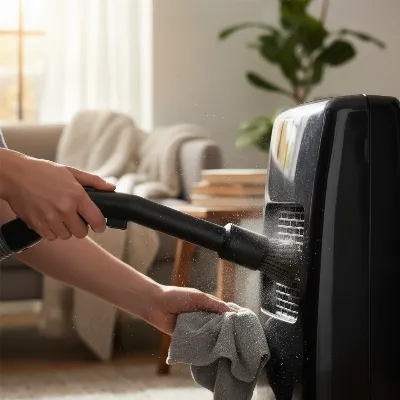 A person cleaning dust from a space heater's vents with a vacuum brush attachment
Inspect Internal Components
If you’ve checked all the external factors and your heater still won’t turn on, the issue might be with an internal component. Only attempt this if you are comfortable with basic electronics and have unplugged the heater entirely.
Internal wiring faults, such as loose connections or damaged wires, can interrupt power to the heating element. Carefully open the heater’s casing (if your model allows for safe access according to its manual) and visually inspect for any obvious signs of damage or dislodged wires. Another common internal component failure is a blown thermal fuse. This fuse is designed to melt and cut power if the heater reaches a dangerously high temperature, preventing overheating. If the thermal fuse is blown, the heater will not produce heat or turn on. While replacing a thermal fuse is a DIY possibility for some, it requires specific tools and knowledge. Similarly, the resistive heating element itself can sometimes be damaged or burnt out. Look for any visible breaks or scorch marks on the element. For these more complex internal issues, if you’re not confident in your ability to diagnose and repair safely, it’s often best to consult a professional technician or consider replacing the unit. Never bypass safety features like the thermal fuse, as they are critical for preventing fire hazards.
“Always when dealing with any electrical appliance, safety comes first. If you’re unsure about inspecting internal components, it’s safer to seek professional help than risk an electrical hazard.” – Admin, ReviewMails.com, Space Heater Technician
When to Consider Professional Help or Replacement
While many space heater issues are fixable at home, there are times when it’s wiser to call a professional or invest in a new unit. If you’ve tried all the troubleshooting steps and your heater still refuses to work, or if the circuit breaker consistently trips, it indicates a more serious underlying electrical problem that requires expert attention. Issues with the heating element or thermostat that you can’t easily resolve might also warrant professional repair. However, given the relatively low cost of many space heaters, a professional repair might be more expensive than simply buying a new one, especially for older or less expensive models. Consider the age of your heater, the cost of potential parts and labor, and the frequency of issues when making your decision.
Conclusion
Getting a space heater to turn on can often be a simple process of methodical troubleshooting. By methodically checking the power supply, verifying thermostat settings, addressing tripped safety features, and ensuring clean airflow, you can resolve many common problems without needing professional help. to always prioritize safety by unplugging the unit before any inspections or cleaning. While most issues are minor, persistent problems or concerns about electrical components should prompt a call to a qualified technician or lead you to consider a new, reliable space heater. Don’t let a chilly room get the best of you—a little DIY effort might be all it takes to bring the warmth back.
Frequently Asked Questions
Why does my space heater keep turning off after a few minutes?
Your space heater likely has an automatic overheat protection or tip-over switch engaged. This usually happens if there’s blocked airflow due to dust, objects too close, or if the unit is on an unstable surface. Unplug it, let it cool down, clear any obstructions around the vents, and ensure it’s on a flat, stable surface before restarting.
Can a dirty space heater prevent it from turning on?
Yes, a dirty space heater can absolutely prevent it from turning on. Accumulated dust and debris can restrict airflow, causing the unit to overheat and trigger its internal safety shutoff mechanism. Regular cleaning of vents and grilles is crucial for proper function.
What should I do if my circuit breaker keeps tripping when I use my space heater?
If your circuit breaker continuously trips, your space heater might be drawing too much power for that circuit, or there could be a fault within the heater itself. Try plugging the heater into a different, dedicated outlet on another circuit. If it still trips, discontinue use and consult an electrician to inspect your home’s wiring or consider replacing the heater.
Is it safe to try and fix an electric space heater myself?
Many external issues like power supply, thermostat settings, or blocked vents can be safely troubleshot and fixed by yourself after unplugging the unit. However, for internal electrical components, wiring, or heating elements, it’s recommended to exercise caution. If you’re not experienced or comfortable, it’s safer to seek professional assistance.
How often should I clean my space heater to prevent issues?
The frequency depends on usage and environment, but generally, it’s a good practice to clean your space heater at least once a month during periods of regular use. If you have pets or a dusty home, more frequent cleaning might be necessary to ensure optimal performance and safety.
Frequently Asked Questions
Why does my space heater keep turning off after a few minutes?
Your space heater likely has an automatic overheat protection or tip-over switch engaged. This usually happens if there's blocked airflow due to dust, objects too close, or if the unit is on an unstable surface. Unplug it, let it cool down, clear any obstructions around the vents, and ensure it's on a flat, stable surface before restarting.
Can a dirty space heater prevent it from turning on?
Yes, a dirty space heater can absolutely prevent it from turning on. Accumulated dust and debris can restrict airflow, causing the unit to overheat and trigger its internal safety shutoff mechanism. Regular cleaning of vents and grilles is crucial for proper function, ideally once a month during regular use.
What should I do if my circuit breaker keeps tripping when I use my space heater?
If your circuit breaker continuously trips, your space heater might be drawing too much power for that circuit, or there could be a fault within the heater itself. Try plugging the heater into a different, dedicated outlet on another circuit. If it still trips, discontinue use and consult an electrician to inspect your home's wiring or consider replacing the heater.
Is it safe to try and fix an electric space heater myself?
Many external issues like power supply, thermostat settings, or blocked vents can be safely troubleshot and fixed by yourself after unplugging the unit. However, for internal electrical components, wiring, or heating elements, it's recommended to exercise caution. If you're not experienced or comfortable, it's safer to seek professional assistance.
How often should I clean my space heater to prevent issues?
The frequency depends on usage and environment, but generally, it's a good practice to clean your space heater at least once a month during periods of regular use. If you have pets or a dusty home, more frequent cleaning might be necessary to ensure optimal performance and safety, preventing issues like overheating.
Fix a Space Heater That Won't Turn On
Troubleshoot common issues preventing your space heater from turning on, including power supply, thermostat settings, safety features, and airflow blockages.
Ensure the heater is firmly plugged into a working wall outlet. Test the outlet with another appliance and check your home's circuit breaker for any tripped switches. Inspect the heater's power cord for damage.
Verify the heater's main power switch is on and the thermostat is set to 'heat' mode, with the desired temperature higher than the current room temperature. Adjust the dial or digital settings as needed.
Confirm the heater is on a flat, stable surface to engage the tip-over switch. If it feels hot, unplug it and let it cool for 10-30 minutes to reset overheat protection. Look for a manual reset button if applicable.
Unplug the heater and use a soft brush or vacuum to remove dust from vents and grilles. Ensure at least three feet of clearance around the heater to prevent blocked airflow and overheating.
If comfortable with basic electronics and after unplugging, carefully open the casing to check for loose wires or a blown thermal fuse. For complex internal issues, consult a professional technician or consider replacing the unit.

I had a space heater that just wouldn’t turn on, no matter what. I was about to give up, but then I remembered reading about blocked airflow being a common issue. Sure enough, there was a ton of lint in the vents. Cleaned it out and now it’s working like new. Thanks for the detailed advice!
I tried all the tips for my heater that wouldn’t turn on, especially checking the thermostat settings. Mine was definitely set too low, but even after adjusting it, it’s still a bit finicky. It works, but sometimes I have to fiddle with the dial a few times to get it to kick in. Not perfect, but better than nothing.
This was a lifesaver! My heater kept cutting out, and I thought it was broken. Turns out, the safety features were activating because of dust buildup. A quick clean, as suggested, and it’s running perfectly again. So glad I didn’t have to call a repairman.
My space heater suddenly stopped working last week, and I was ready to just buy a new one. But after reading about checking the power source, I realized the outlet itself was the problem! Switched it to another one and it fired right up. Saved me a bunch of money and hassle.